Meta has launched Llama 3.1 405B, an open-source language model that directly competes with the proprietary giants of the industry. With 405 billion parameters, this model promises exceptional performance in mathematics, complex reasoning, and natural language understanding. But beyond the numbers, its true impact lies in its open license, which allows any developer to download, modify, and run the model locally, democratizing access to a technology that until now was the privilege of a few.
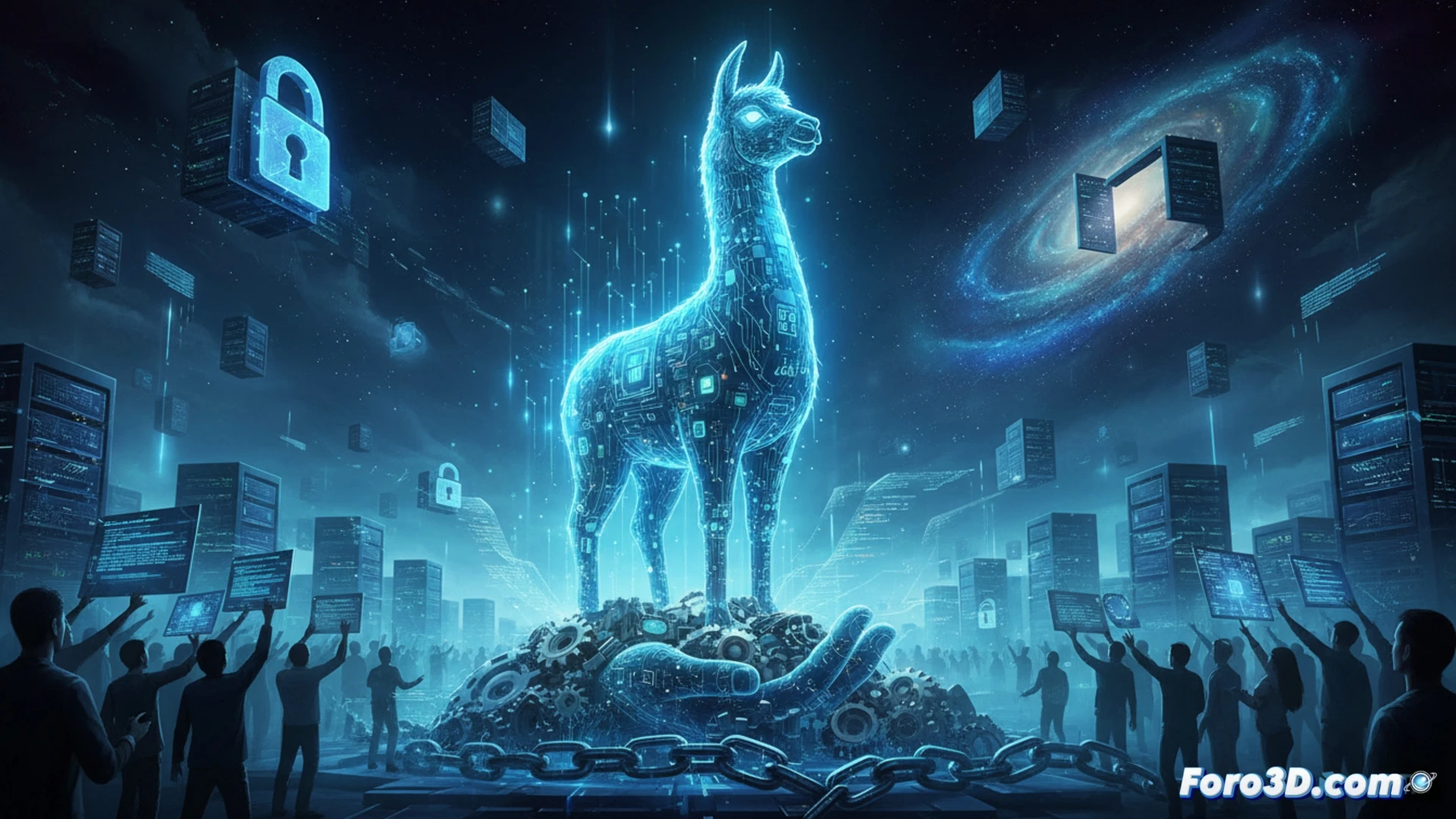
Technical performance and modular architecture 🚀
From a technical standpoint, Llama 3.1 405B introduces innovations in training and inference efficiency. Meta has optimized the model to run on consumer hardware, lowering the entry barrier for researchers and small businesses. Its multi-query attention architecture enables faster parallel processing, while fine-tuning through reinforcement learning with human feedback (RLHF) improves response coherence and safety. However, the real challenge remains moderation: being open, anyone can remove safety filters, raising technical questions about how to implement ethical barriers without compromising openness.
The social dilemma of open source in AI ⚖️
The democratization offered by Llama 3.1 405B is a double-edged sword. On one hand, it empowers developer communities in countries with limited resources, fostering local innovation and algorithmic transparency. On the other, it eliminates the centralized control mechanisms that companies like OpenAI impose on their models. Public perception oscillates between fascination with having a free high-level AI and fear that it could be used for mass disinformation or identity theft. In this ecosystem, responsibility no longer falls solely on Meta, but on every user who decides to run the model.
How can the openness of a model like Llama 3.1 405B redefine the balance of power between large tech corporations and the independent developer community in the digital society?
(PS: moderating an internet community is like herding cats... with keyboards and no sleep)